Wrapped in red and white map of Miami University’s campus, StrEATS, the food truck is easily spotted around the campus. Along with its unique menus and style of service to the university, it holds a small community in itself. The customers seem to enjoy as they make it a daily routine to get their meals from StrEATS and the employees respond by providing good customer service while making personal connections with them.
Everyone who works at food truck appears to be good at customer service as they welcome the students and offer suggestions as they prepare the orders. Unlike dining halls which are a lot busier, StrEATS is more individualized and faster. This requires them to be prepared for different type of student with different orders. Everything on the menu is something that the students can grab and eat while walking between the classes. They have a good idea of what their customers demand the most so they plan accordingly and have the materials ready and stocked.
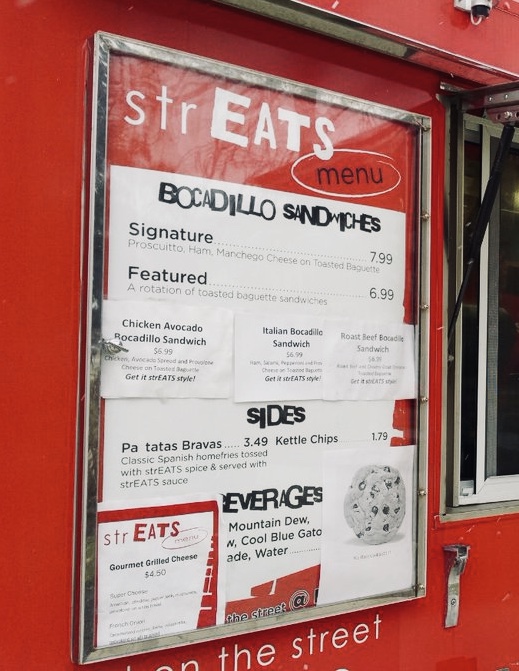
Compared to other ‘on-the-go meal’ locations on campus such as King Cafe and the mini shelves besides every food place in Armstrong, StrEATS have more satisfying foods like sandwiches compared to salads, fruits and parfait cups available at the other locations.
“We have regulars that get same thing every time, so we see ‘oh, here the chicken avocado guy coming’ and have it ready when they get here. It is like having a clientele,” says Sherry Bedford, food service assistant of StrEATS. “It makes my day to make somebody else’s day. And its same for them as well [referring to other employees working], we like making other people happy.”
Alyssa Ruben started working on the truck in Fall 2014 and is a dedicated employee as she has been working there every semester since then. Sometimes, she even schedules her classes in the afternoons so she can work at the food truck. Ruben is good at customer service as she always asks them if they want to add something to the order or want some changes done to the sandwich they ordered. She enjoys her job at the truck.
She does morning shift this semester as her classes start late but has previously worked on the truck even in the couple hours break between her classes. “This is like her baby when she’s on here,” says Bedford about Ruben.
The part that Ruben likes the most about her job is the community that exists on the truck, which includes all the employees, Bedford, and the customers. “It’s not just like working there that makes me so passionate about it, but the bonding and relationships that I have developed that makes me do it every semester,” shared Ruben. Ruben has been working there for 2 years now and it is the longest period any employee has previously served.
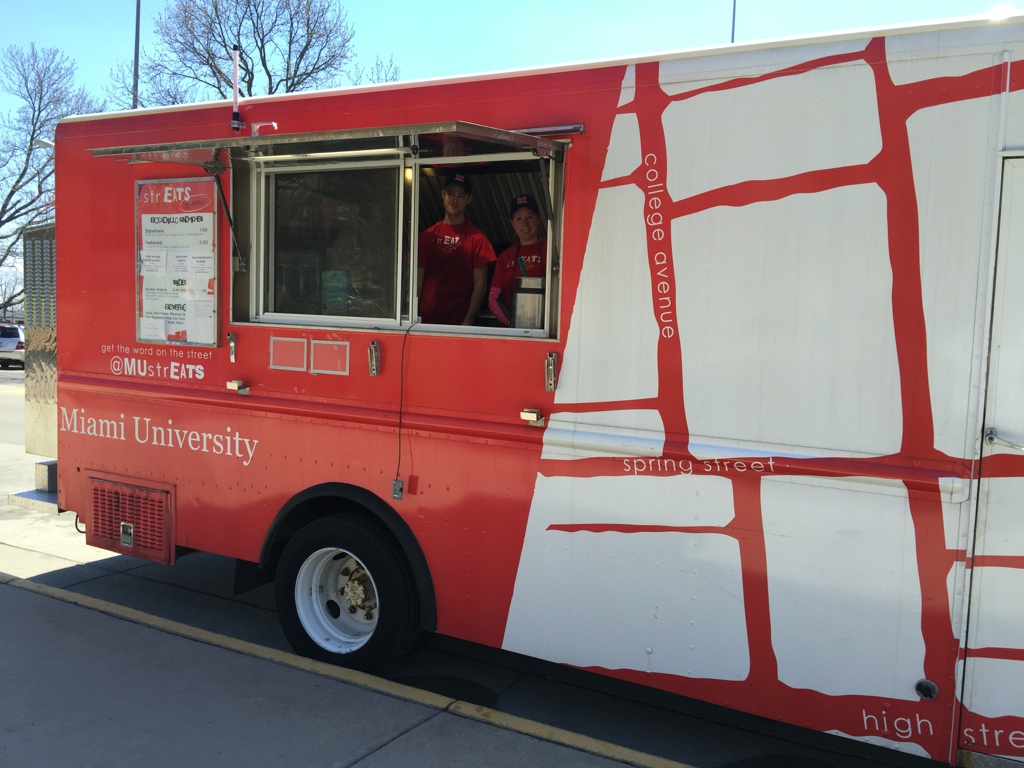
Nick Kanaly is one of the newer employees and agrees with Ruben’s views.
The employees often tease Kanaly in a healthy way, which makes him enjoy his time working. As Kanaly notices a friend walking toward the truck, he starts making some sandwiches. Bedford laughs and asks him to make the sandwich ‘really loaded’ and well done to make his friend happy. “He’s [Nick] more talkative and funnier to get reaction out of,” shared Bedford. “Funnier to mess with,” added Kanaly with a laughter of joy
Along with all the fun going around, they still prioritize customer service above all. That counteracts the problems such as the truck does not have fixed menus and is physically moving all the time. The dining service decides the menu and instructs them where to park and serve. This semester, the truck is by Farmer’s School of Business most of the time due to the construction work at Armstrong. But previously, they had stops at maple street, behind Armstrong and at Farmer School of Business.
According to the business data analytical firm, IBISWorld information on food trucks, the most important factors that contribute toward the profit of food truck had to deal with the location and menu depending on the locations demographics.
Bedford has previously worked in Shriver for four years and recalls that the biggest selling sandwich was bagel, egg and cheese, and was always sold out even in continues preparation. “I don’t know why we don’t have that. If something sells really well and customers demand it highly, why don’t we have it? I don’t understand their logic,” says Bedford.
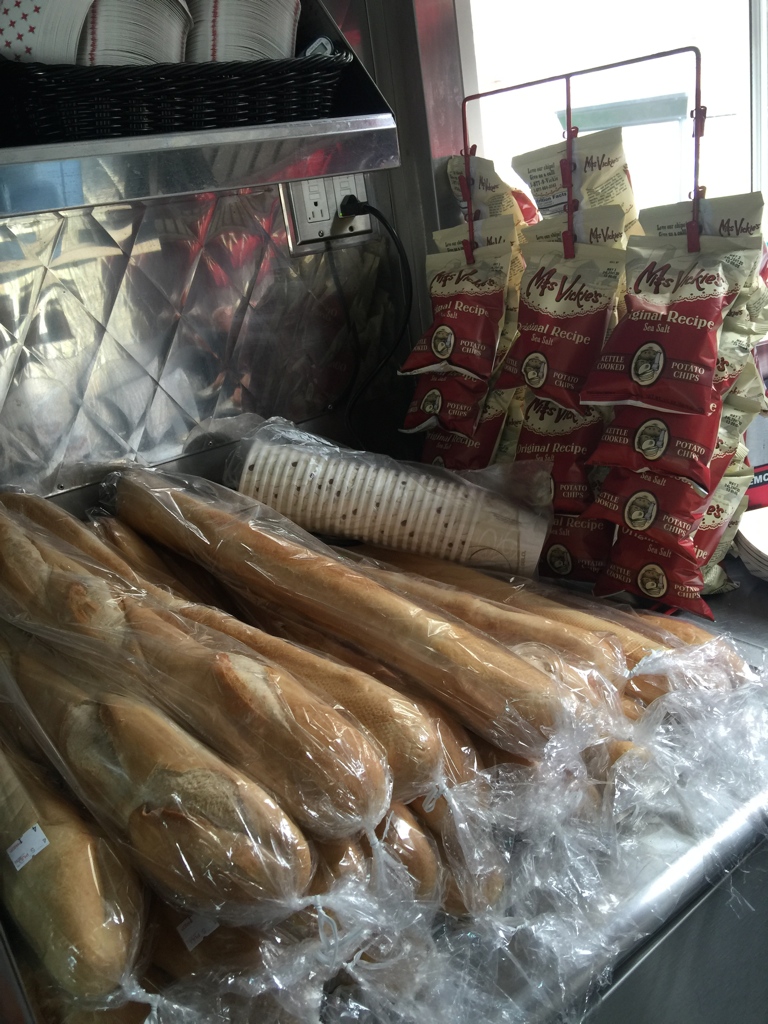
With the pressure and regulations from the authorities, there are a few other issues that the truck faces, largely the storage space on the truck. They have a frying top, deep fryer, warmer, refrigerator and a freezer on truck, that takes up lot of space and leaves a little for the raw materials.
“On busy days, we run out of things, especially when they want all these different dishes on menu,” says Bedford. “Because we can only hold so much on here, we have to shut down for an hour and go back to restock. I have to heat everything back up again if we shut down, which I hate doing the most.”
The solution to this, that they found, is to suggest the customers something that is available. Time availability of employees is another issue. Similar to Ruben, some students have to work in between their classes as the truck is scheduled to run throughout the day, especially at peak times.
This hinders their efficiency in customer service. According to the Bureau of Labor Statistics, working time and environment at such places can be hectic and stressful, sometimes leading to dissatisfied customers.
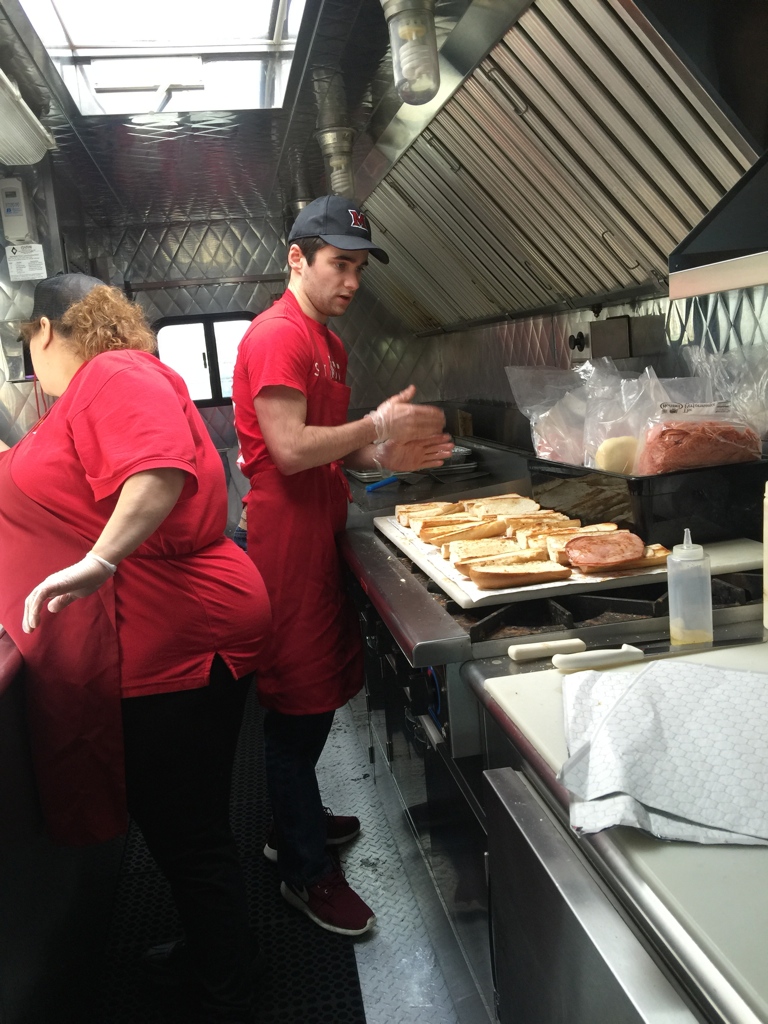
Apart from dealing with these issues, the community cherishes every moment that they spent in the truck as they are seen laughing and enjoying while helping each other in their tasks. A thing that they enjoy the most is experimenting with the recipes in the free time. A week before spring break, they experimented and made an Apple Pie Sandwich. “It tastes just like hot apple pie with cheddar cheese and sprinkle of cinnamon on top. The melted cheese into the bread made it like the crust,” described Bedford.
“It sounds really weird, but it’s probably one of the better sandwiches I’ve had on here,” said Kanaly. “I took a little mouse bite at first but went like ‘THIS IS GOOD…!!!’ a moment later.”
Like a regular community that has issues to deal as a group and involve people who must manage their personal lives while serving towards a common community goal, the employees at StrEATS consider themselves as a small community in which they blend in and embrace their connections with the customers and each other, through the food truck.

 Rasika Rane